


“Tout le monde déteste l’IA.” That phrase, printed in plain black and white, was one of the first things that caught my eye in the neighborhood in Paris where we’re staying this summer. It’s an advertisement for the cover story in the July issue of Le Monde Diplomatique, posted on what seemed like every other newsstand I walked by:

Tout le monde déteste l’IA. Everyone hates AI.
I picked up a copy. My French is strictly limited to clumsy greetings and obnoxiously pronounced guidebook phrases, but a quick Google translation shows that the opening paragraphs indeed go pretty hard:
Une houle contestataire enfle aux
Etats-Unis contre le culte de l’automatisation, les ravages du tout-numerique, la proliferation des centres de donnees, l’arrogance et le pouvoir des elites dela tech la corruption des elus quie se prosternent a leurs pieds.
Or, in English:
A wave of protest is swelling in the United States against the cult of automation, the ravages of everything digital, the proliferation of data centers, the arrogance and power of tech elites, and the corruption of elected officials who grovel at their feet.
Parisians have proven to be pretty hostile to AI themselves. When the AI wearable company Friend, whose CEO Avi Schiffmann is French-American, launched an ad campaign in the Paris Metro—much like it did in New York City’s subway—people tore down the posters or put stickers over them to subvert its message.
While the Friend posters are gone—Schiffmann had to suspend the launch of his product in Europe, given that the always-on, always-listening AI device likely runs afoul of multiple data privacy laws—there’s plenty of other anti-AI mischief on display in the city of light. Most notably, there’s another ad series all over the Metro comprised of what appear to AI-generated images. It has not been received kindly.
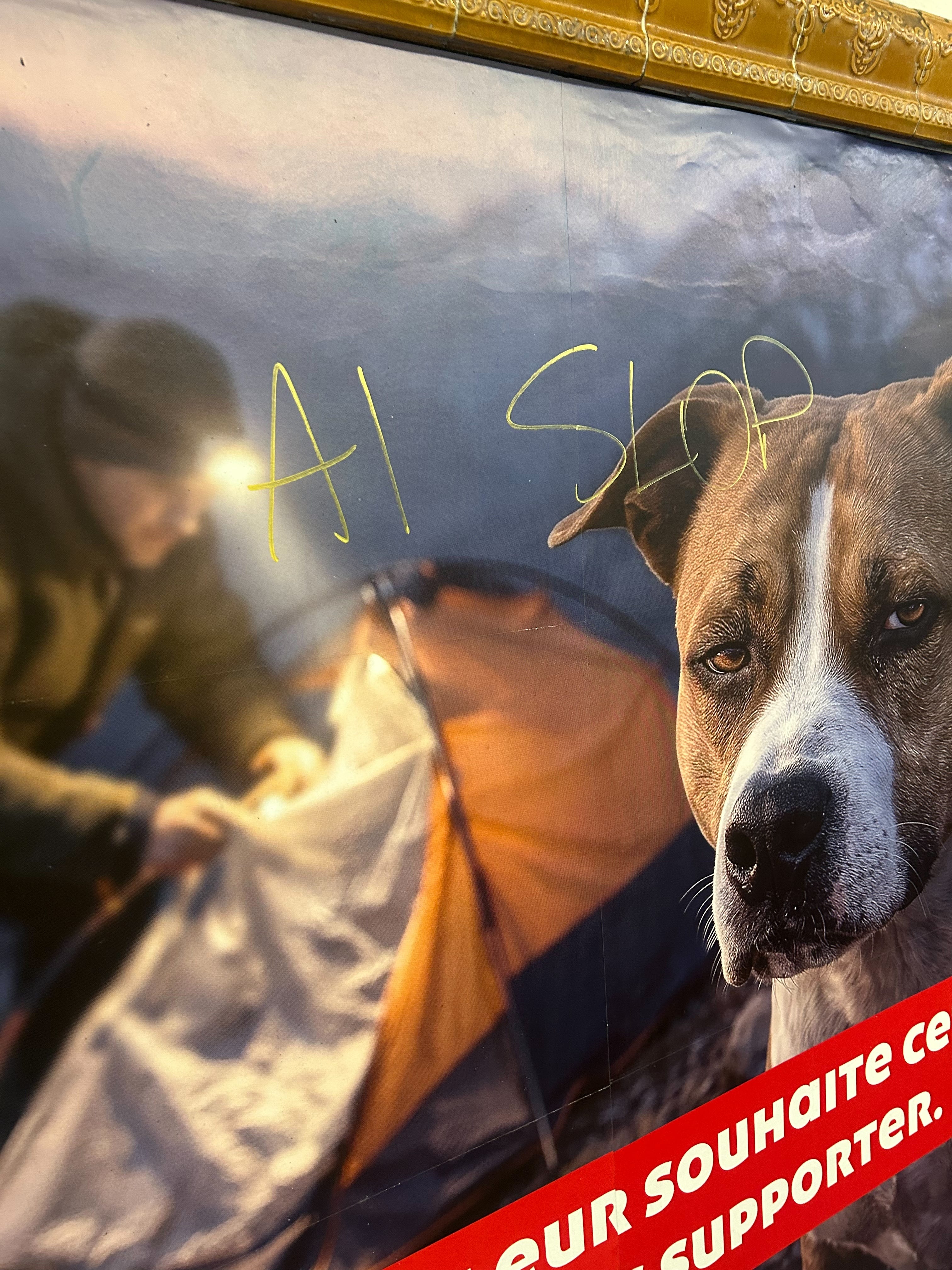
As you can see, at multiple stations, the ads have been tagged as AI SLOP.
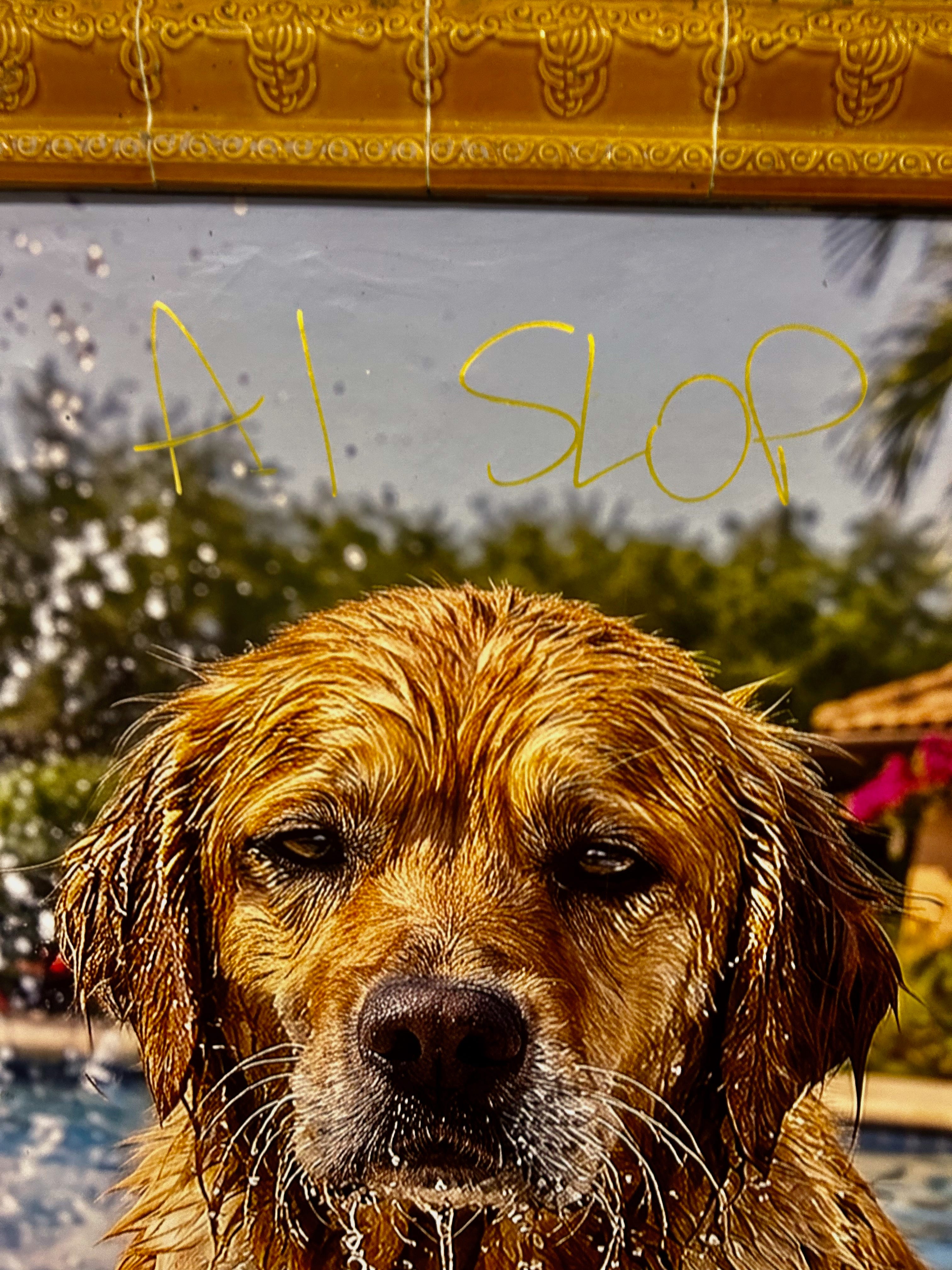
Or more colorfully:

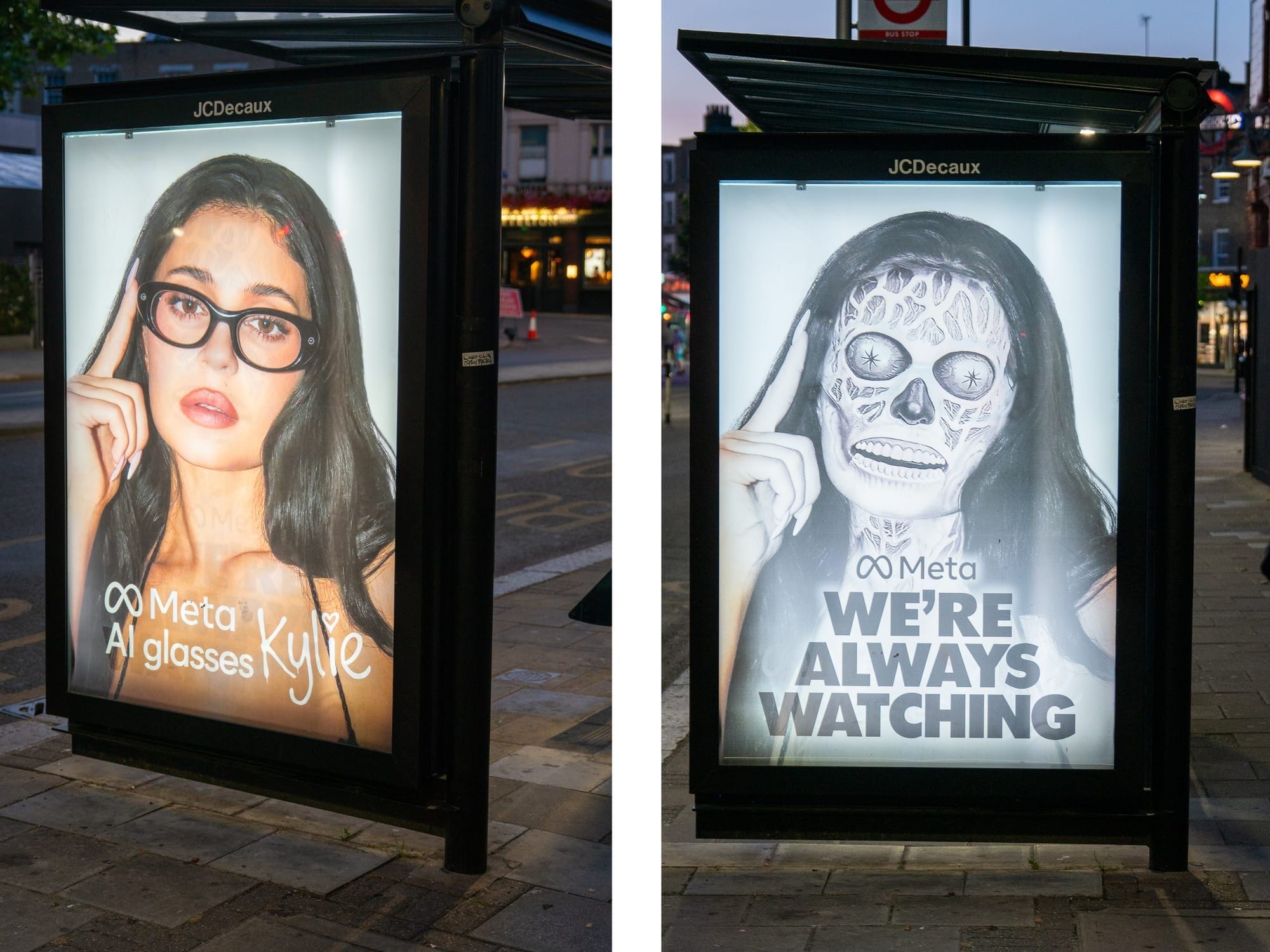
Not quite as savvy as Everyone Hates Elon’s recent subversions of Meta’s AI glasses ads in London, perhaps, but still:
French attitudes towards AI, according to a recent poll from the Centre pour la Securité de l’IA (CESIA), are in some ways, nearly as pessimistic as Americans’. Just 8% of respondents said they wanted to accelerate AI development, compared to 42% who said they wanted to slow it down “significantly” or pause it altogether.1
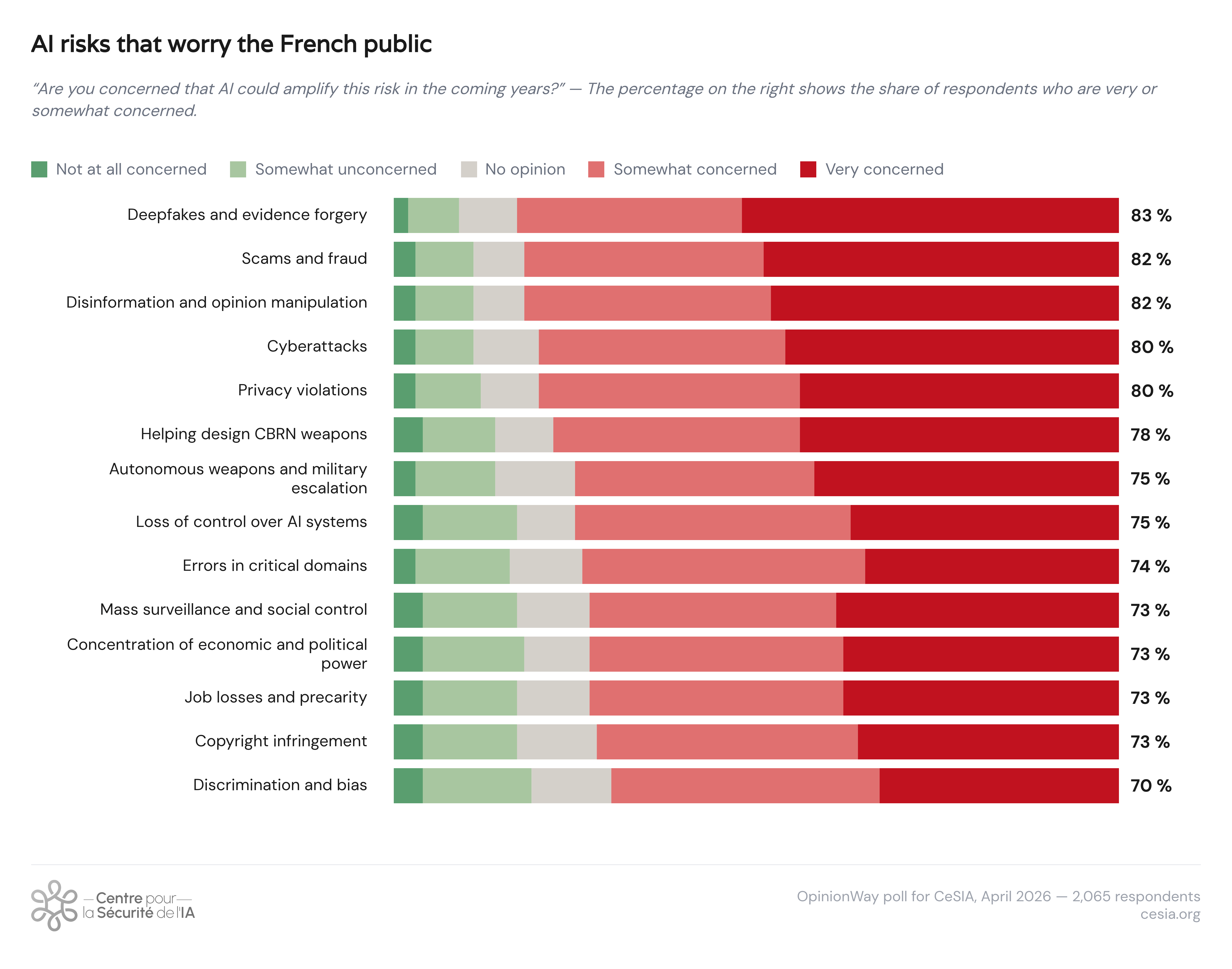
Like in the US, citizen concerns about AI over a great many subjects are shared across the political spectrum. Also as in the US, proposed data center projects are being met with growing opposition, and politicians are beginning to join the fray. Pushing for stronger AI regulation is the popular political position.
Unlike the US, France and the EU are currently capable of regulating the tech industry. This of course is why you hear American tech executives grouse about Europe so much. It’s a complex policy landscape with plenty of its own struggles—I’ve been contacted by Parisian union members who are enmeshed in battles with keeping AI out of their workplaces, for instance—but France is, nonetheless, capable of strong tech regulatory action on a level Americans are unaccustomed to. A timely example: Just last week, France’s national gambling authority banned Polymarket, the bet-on-everything app that’s a strong contender for the most predatory and openly noxious startup to rise to prominence in recent years.
In conversations, in the media, and even in the graffiti, the opposition feels more theoretical and philosophical; less vitriolic, less sweat-drenched. Perhaps because, as I and others have argued before, how much you déteste AI tends to depend on your economic and class position; what AI stands to take away from you, and where that might leave you. France, with its more generous social safety net, longstanding cultural dedication to craftsmanship and the arts, and more robust public spaces, generally feels more insulated from the threat vectors of Silicon Valley-shaped AI; ie, job automation, AI slop, and chatbot addiction. Generally.
Now, sure, this is a big, zoomed out generalization that admittedly risks the ‘columnist talks to his cab driver’ization of the issue at hand, but I was a columnist, and old habits die hard, so too bad: Walking around Paris, I do feel like I’ve seen fewer faces buried in phones in the way they are in US cities, certainly in my hometown of LA. I have seen not one but two people, on two separate occasions, walking down the street with their nose in a paperback. In a business district, no less. That’s beautiful. There are plenty of people staring at screens on the metro and waiting in lines and such, but they are eclipsed by the throngs at restaurants, the device-free bodies in parks and public places. The vibe is different.
Obviously, you can’t make too much of some loose anecdata based on hanging out somewhere for a few weeks, but it certainly feels that some of the ingredients to the antidote to Silicon Valley’s antisocial AI age are to be found around here. Robust communal spaces, culture that places unambiguous value on human arts, and policy that’s unafraid to pull punches in regulating—or banning—toxic and exploitative commercial tech. It’d be a start, anyway.
A dispatch from the days of Ludd
Embracing com space, logging off, centering community; why, these are exactly the things that the new Luddites, fresh off their Summer of Ludd, are pushing for.

Sarah Thankam Mathews has a beautiful piece about the wider movement, and her (all of our?) potential place in it, over at n+1. I could have excerpted pretty much any bit of this, so here’s one snippet at random:
Social media platforms, in my lifetime, helped ordinary people find one another, narrate their lives, organize against power, pressure institutions, and make visible much in our culture that had long been deliberately unseen. They had caused the culture to shift in infinite ways, many of them ridiculous and terrible, some of them tilted toward social justice and historical honesty. Marriage equality, the Arab Spring, Black Lives Matter, mutual aid networks, disabled communities, gay kids in hostile towns finding one another—it seemed only truthful to say that the age of social media and smartphones helped make these more possible. And some of those shifts in mass opinion were easy-come, easy-go: mercurial, shallowly held, easily co-opted; the reactionary backlash we are now living through seems evidence enough of that.
The platforms are rancid now. The incentives of capitalist forces and quantification have mined and fracked them into an arid, increasingly joyless desert. But for a time, they changed the conditions under which people could encounter one another and be encountered by the world. The Luddiverse, I could see, was trying to make this happen again.
Mathews, I might add, is author of the excellent novel about millennial life, precarity and late capitalism, All This Could Be Different, which I discovered through… n+1’s annual book quiz. Coming full circle here.
A new survey on generative AI’s impact on performing artists
The brilliant director and algorithmic theater-maker Annie Dorsen is conducting a survey on how generative AI is impacting the livelihoods of performing artists and workers in the industry. I pitched in (a little) with some advising on the survey, which I now encourage any and all readers to whom this applies to take. Share it with anyone who might be interested, please! The more good data we get about how generative AI is impacting labor, the better.
The survey is here. An FAQ is here. It’s organized by SMU DataArts and supported by the Mozilla, Doris Duke, and Ford Foundations. Here’s a rundown:
This pathbreaking study examines the real-world impacts of generative AI on performing artists working in theater, dance, and live music.
Who should take this survey?
This survey is for anyone who works in the performing arts, at any career stage or in any creative role: performers, directors and choreographers, designers, and technicians.
Why are we doing this survey now?
While there has been significant discussion about AI and the arts, there is very little information about how these technologies are actually affecting artists’ work, income, career opportunities, and creative practices. This research aims to fill that gap.
The findings will be used to inform policy discussions, funding priorities, advocacy efforts, and field-wide support strategies for artists navigating the rapidly changing landscape of generative AI.
OK OK. That’s it for today. On the podcast later this week, I chat with Quinn Slobodian, co-author of Muskism: A Guide for the Perplexed, about SpaceX, AI, the world’s richest man and what, exactly, he’s a function of. Stay tuned for that, it’s a great conversation.
Finally, this work is made possible by readers who chip in a few bucks a month to help me keep the lights on; if you find value in this stuff, and you’re able, consider pitching in, too. Many ludditic thanks to all who already do. Until next time—au revoir, saboteurs.
Also perhaps of note: Another poll finds that 39% of French people say they use AI at least once a week.
In Spain last summer, I was shocked at how little people were on their phones, even in the subway. I guess the “tech trance” in stronger in North America
A French couple just ate beside me on Holiday in Da Nang Vietnam. They didn’t look at their phone once and at times were holding hands across the table.