


Sam Altman has declared a “code red” according to an internal memo obtained by news outlets, pausing all non-crucial activities at OpenAI and pushing its chatbot teams to contend with resurgent competition from Google and Anthropic. Google’s new Gemini chatbot is apparently peeling off ChatGPT users at a rate alarming enough for Altman to swing, rather performatively, into action. It is, as other observers have noted, the reverse of the last big ‘code red’ in AI, when it was Google caught flat-footed by OpenAI’s viral chatbot success in 2022, and issued its own internal alarm.
Nearly everything OpenAI does leaks, so Altman and the executive staff must have anticipated that this would become techworld headline news. The aim might have been to assure investors and partners that OpenAI was taking the competition seriously, and working double time to stay on top. Yet in so doing, it has broadcasted its own pervasive vulnerability.
A quick note that this full post is for paying subscribers. I’m a 100% independent journalist and this work is made possible by readers who chip in a small sum each month to support it. Thanks all, and to everyone who reads and backs Blood in the Machine.
As Gary Marcus noted in his commentary on the ‘code red’ development, OpenAI is in a uniquely tough spot (and has been all along):
In short, OpenAI has lost their lead, and massively overextended themselves. Worse, they are burning billions of dollars of month… Their war chest is impressive, but their burn rate is terrifying. My guess is that they have cumulatively raised on the order of $100 billion since they launched, perhaps more than any other company in history, but have already spent most of it, and likely don’t have much more than a year’s runway left.
Developing, training, and operating chatbots the way that OpenAI—and Google, Anthropic, and Meta do, with a more-is-more approach to building ever-larger datasets and ever-larger data centers to train and run them, is, as we know, an almost incomprehensibly expensive undertaking. So much so that even with tens of billions of dollars at its disposal, OpenAI can’t sustainably compete with Google or the other giants, who are bringing in that much in revenue from their advertising businesses every quarter, and can offset the seemingly endless costs of such expansion.

But if OpenAI falls behind in technology or its product slate, and it turns out Google’s Gemini or Anthropic’s Claude are just as appealing to consumers, investors might jump ship. And OpenAI is currently very much at the mercy of its investors. Which is why this ‘code red’ situation is kind of a big deal—OpenAI’s brass decided it was important to publicly signal that it’s getting in the trenches and doing something about its weakened position, even if doing so risked drawing attention to said weak position.
This is a rare admission of doubt and fallibility for the almost-sociopathically brash AI startup, which has projected utter confidence and assurance that its vision of the AI future is dawning nonstop for the last two years. So much of the AI game boils down to cultivation and management of perception, especially given that there are so many chatbot competitors available now, and that the technology is essentially a commodity. Being First and Best anointed OpenAI to consumers and backers alike; if OpenAI is no longer either of those things, and it doesn’t have a business model to fall back on, it’s not clear what, it exactly, what OpenAI’s story becomes.
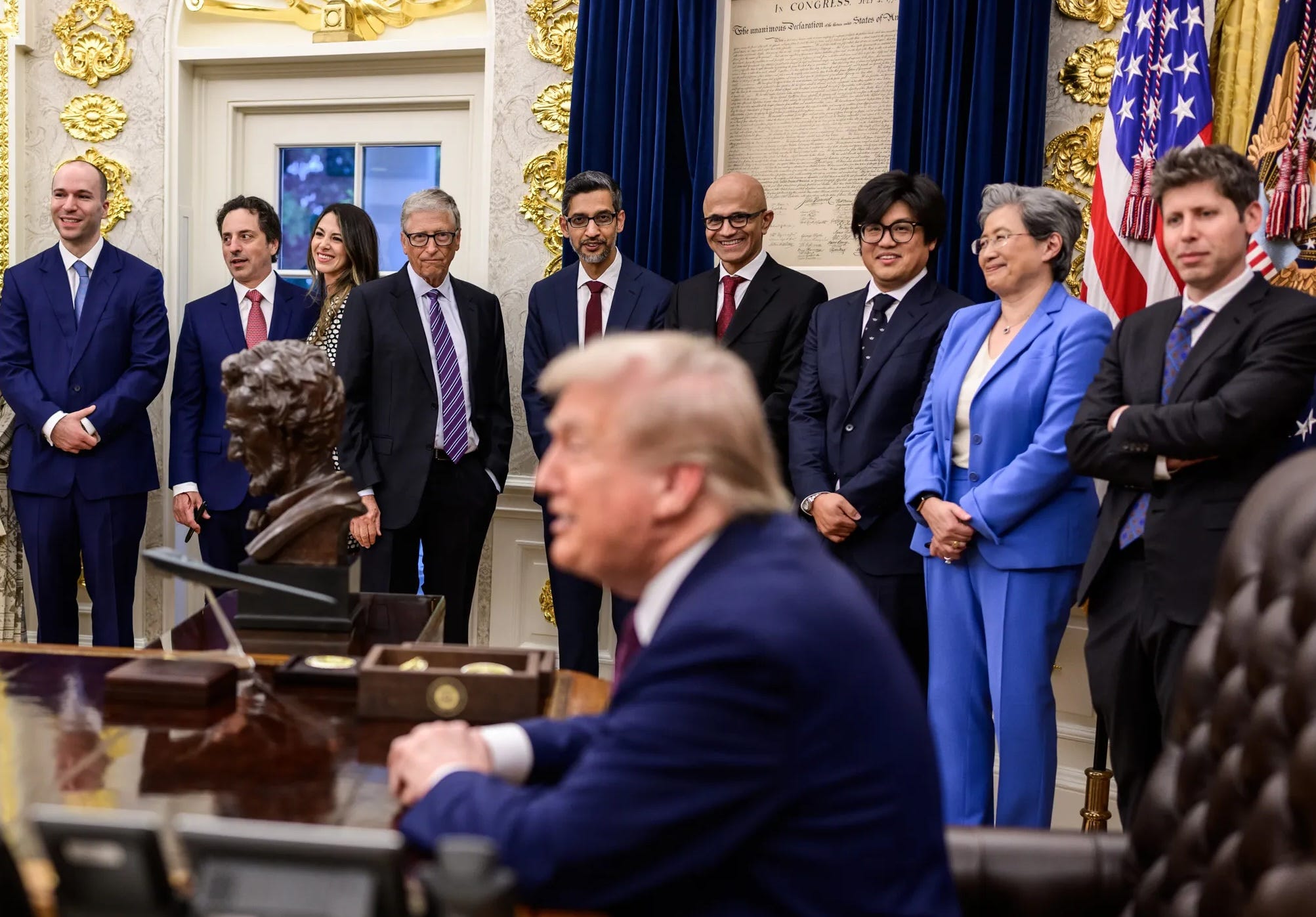
Which is why it was especially notable that the OpenAI code red news dovetailed with another big AI storyline: The increased sunlight on the role of Donald Trump’s AI and crypto czar, billionaire venture capitalist David Sacks, and the inter-GOP political drama unfolding around the state AI law moratorium executive order that he was responsible for drafting. That drama is revealing the unique vulnerabilities of the once-unimpeachable pro-AI faction in the Trump administration, and uncovering fault lines that threaten it from the inside. Along with mounting data center protests and souring public opinion, you might even say that there’s far more than one ‘code red’ sounding for the AI industry right now.
